
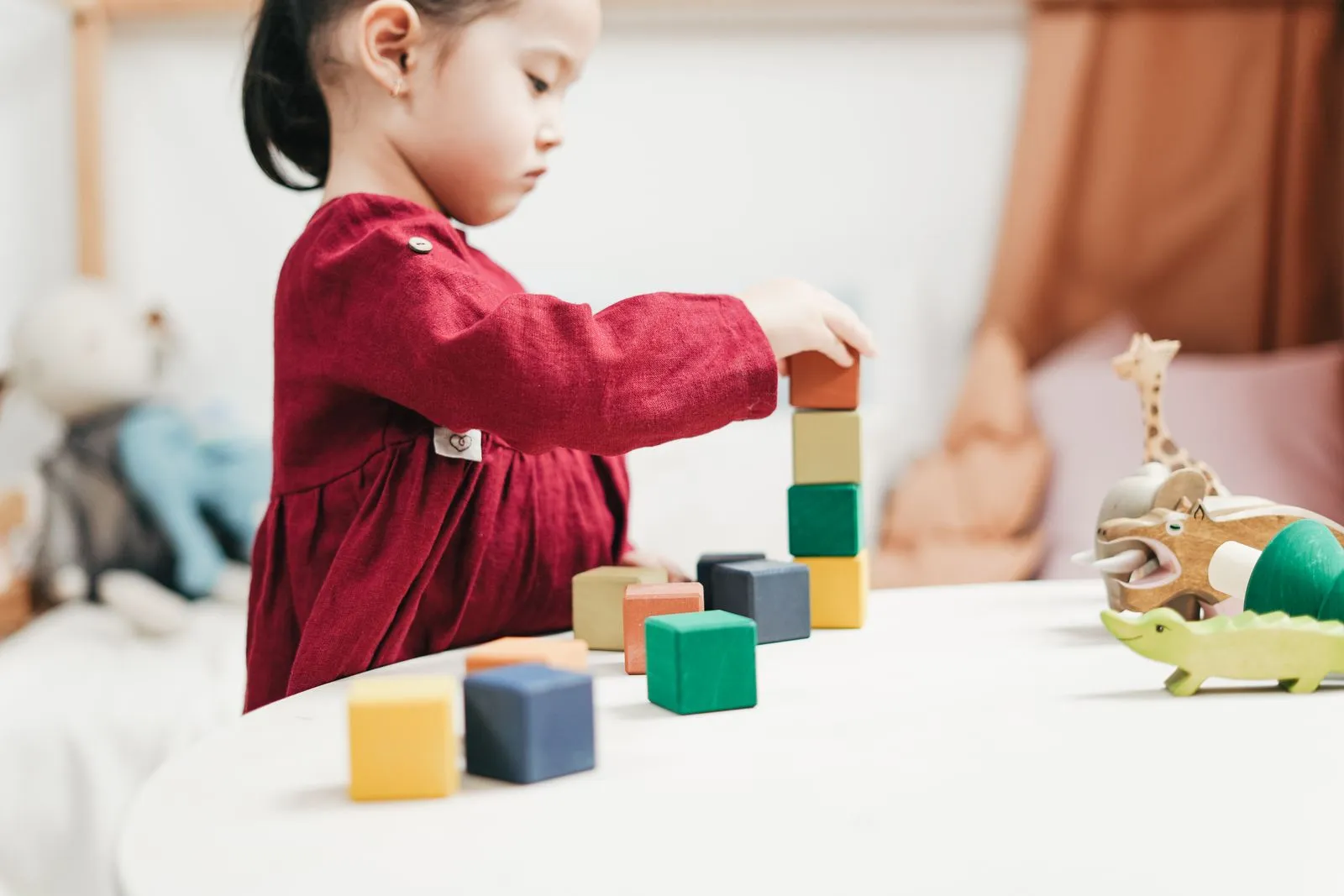
A wooden toy can invite children to build, pretend, sort, or solve problems, but the material alone does not make it the right choice. Consider how your child plays, what skills they are developing, and whether the toy fits their age and surroundings. Then check its dimensions and construction for practical safety and durability. A few careful comparisons can help you choose a toy that gets used often rather than one that looks appealing but sits on a shelf.
Match the Toy to Age
Start with the maker’s age guidance, then consider your child’s abilities and habits. Age labels are general recommendations, not a substitute for supervision or individual judgment. For babies and toddlers who still mouth objects, avoid toys with small detachable parts, loose pieces, or openings that could trap fingers. Older children may be ready for more pieces, but check that they can use them safely and put them away.
Think about the skills the toy asks a child to use. A simple stacking toy may suit a young child practicing grasping and balance, while a more complex puzzle may frustrate them if the pieces require precise coordination. Choose a manageable challenge: your child should be able to explore independently or make progress with a little help, without the toy creating repeated disappointment.
Choose a Clear Play Purpose
Decide whether you want open-ended play or a toy with a specific task. Blocks, figures, and simple vehicles can support many kinds of play as a child’s ideas change. Puzzles, shape sorters, and balancing toys offer more defined activities and can help children practice particular skills. Neither type is automatically better; choose based on what your child enjoys and how they tend to engage.
Consider how the toy will fit into play you already see. A child who likes making up stories may use wooden animals or people in imaginative scenes. A child drawn to building may prefer pieces that connect or stack in different ways. If you are unsure, look for a toy with more than one way to use it, and avoid buying a set simply because it contains many pieces.
Check Size and Storage
Check the toy’s dimensions and the size of any individual pieces. A large toy may need a clear floor area, while a small one may be easier to carry but harder to keep track of. For young children, piece size matters for safety: follow age guidance and keep small components away from children who may put them in their mouths. Consider the size of the toy in relation to your child’s hands and reach.
Plan where the toy will be used and stored. A set that is easy to access and return to a basket or shelf is more likely to become part of daily play. For travel or visits, choose a compact option with a manageable number of pieces. If the toy includes a box or bag, check whether it is practical for storage and whether it keeps loose parts contained.
Inspect Materials and Construction
Look for smooth surfaces, securely attached parts, and edges that are shaped and finished consistently. Run your fingers over accessible areas to check for splinters, rough patches, or sharp corners. Examine joints and connections for looseness, especially on toys that children will pull, push, or handle repeatedly. If a part feels unstable or the finish is damaged, do not give the toy to a child until the issue is addressed.
Ask what wood and finish the maker uses, and read any product care or safety information. A durable toy should suit its intended kind of play; a toy designed for gentle indoor use may not withstand rough outdoor handling. Check it periodically for cracks, chips, loose pieces, or worn coatings. Follow the maker’s cleaning instructions, since soaking or harsh cleaners can damage wood and its finish.
Before choosing, compare the toy’s age guidance, play purpose, dimensions, and visible construction. Consider whether it suits your child’s current interests and can be stored and checked easily at home. A well-matched wooden toy supports enjoyable play while giving you clear points to assess fit and upkeep. If you would like help comparing options, contact Cairns Timber Toys.